If you’re aiming to advance your career, an Executive MBA program (EMBA) can be a valuable investment. Prestigious business schools accredited by the Executive MBA council—such as Wharton, MIT Sloan, Chicago Booth, and London Business School—provide some of the most respected EMBA programs in the US.
Executive MBA programs aim to equip you with the necessary skills and knowledge to succeed at an executive level in your career. Whether an EMBA is worth your time depends on various factors, including your personal and professional goals, financial situation, and current career trajectory. On this page, we’ll help you measure the benefits and drawbacks against your specific situation.
You can also contact our expert Executive MBA admissions consulting team for personalized advice on your situation.
Before even considering the benefits of an Executive MBA program, it’s important to determine whether an EMBA or a traditional MBA program would be better suited to your profile.
This can be a challenge. To figure out whether an EMBA is for you, consider your career goals, work experience, and personal circumstances.
Here are the main points of comparison between an EMBA and a full-time MBA:
| EMBA programs | MBA programs |
| Targeted towards experienced professionals: EMBA programs are designed for midcareer professionals with several years of work experience, looking to progress or start their own business. | Designed for early to mid-career professionals: Full-time MBA programs are often geared towards those who are earlier in their careers or looking to make a career switch. |
| Part-time format: EMBA programs typically have a part-time format, allowing students to continue working while pursuing their degree. | Full-time format: Full-time MBA programs usually require students to take a break from work and devote their time to the program. |
| Cohort-based learning: EMBA programs often use a cohort-based learning model, providing students with opportunities to network with peers and learn from their professional experiences. | Diverse student body: Full-time MBA programs often attract students from a wide range of backgrounds, providing opportunities for cultural exchange and exposure to different perspectives. |
| Focus on practical applications: EMBA programs typically focus on practical applications of business concepts and leadership skills to students’ current roles. | Emphasis on career development: Full-time MBA programs often offer career development services, including internships and job placement assistance. |
Executive MBA programs are worth pursuing in situations where they’re likely to help you progress in your career or transition into a new industry. However, there are also other advantages to pursuing an EMBA, such as:
One of the major advantages of getting an EMBA degree is the level of responsibility you are likely to achieve thereafter.

Each year, Menlo Coaching advises a small group of candidates applying to the M7 and other leading MBA programs.
We've been trusted by 2000+ applicants from MBB, Blackstone, Goldman Sachs, Amazon, and more.
With highly personalized guidance from experienced, full-time admissions consultants and unlimited, comprehensive packages, we help applicants submit winning applications.
Are you interested in becoming a client?
Most Executive MBAs are designed around business professionals in the mid- to late stages of their careers. In some cases, without the education that an EMBA provides or the degree to back up their experience and business knowledge, potential EMBA applicants find that their careers are reaching a plateau or that they are having difficulty making an interesting career transition.
Pursuing an Executive MBA can help facilitate such a transition or help break through ceilings that can be extremely difficult to transcend otherwise.
An EMBA from a prestigious business school will do more for your career than a degree from a less distinguished school. Additionally, top programs will give you more credibility, increasing the likelihood of progressing in your industry. Thus, you should consider what programs you’re likely to get into when making decisions about the worth of an Executive MBA program for you.

Another of the most tempting benefits of getting an Executive MBA is the improvement in salary that comes with the qualification.
Most Executive MBA programs equip students with management and leadership skills that make them extremely desirable and strengthen their position in the market, earning these EMBA graduates a significant increase in salary post-EMBA.
As part of your decision process, you should ask yourself when your degree will become profitable. The high cost of most EMBA programs means it’s important to weigh up the probability of earning a higher salary postgraduation. In other words, earning an EMBA is not an economically viable decision for every experienced professional.
For example, if there’s little room for growth in your company and you do not plan on a future career change, an EMBA will have a low rate of future career returns. Find out the available advancement opportunities within the company you work for before beginning your EMBA application journey.
A powerful network is one of the greatest tools anyone can have in business, and business schools pride themselves on the strength and breadth of the networks built in their Executive MBA programs.
These programs’ alumni networks are also famously active, with many Executive MBA students gaining opportunities and connections from school alumni well into their careers.
Different Executive MBA programs have different methods of relationship building for programs which take place on a part-time basis, but generally, business schools will cultivate opportunities to develop relationships between EMBA students—both inside and outside of the classroom.

Further, one of the most unrecognized benefits of an Executive MBA is the psychological component of completing the degree.
Alongside the knowledge and skills that you acquire throughout an Executive MBA, many EMBA students also feel more confident in their abilities and qualifications for increasingly specialized roles.
After all, completing an Executive MBA degree while fully employed is no mean feat—and doing so at a prestigious institution while building up a robust network and maintaining your personal life is even more impressive.
By completing an Executive MBA program, many EMBA students feel they receive a confidence boost in their own abilities and potential to succeed in the business world.
Even considering the above advantages of pursuing an EMBA, prospective students will have to weigh up the cost vs. the benefits of the degree.
Several factors could be considered inhibitors to the value of an Executive MBA, including:
Executive MBA programs are not cheap—with several programs costing upwards of $200k.
When thinking about how to finance your EMBA, you should first find out whether your organization offers any financial support for EMBA students. Companies may assist in different ways—by giving you time off work to attend classes, encouraging you to apply your newfound knowledge in your current position, or paying all or part of your tuition.
Before approaching your boss to ask for employer sponsorship, you should create a business case that demonstrates how earning an Executive MBA degree will help you add value to the company. This would include considerations of how your education could increase business revenue or help you lead more effectively.
Since you will continue working while earning your EMBA, an excellent selling point could be that you will implement what you are learning in the program immediately in the workplace. Employers may be especially interested in sponsoring your graduate business degree if you plan to attend a renowned school, since that would reflect positively on the company.
Depending on the stage of your career, pursuing an Executive MBA might not be worth the price of admission when weighed against your pre-EMBA salary, current level of responsibility, and lifestyle outside of work. The following table shows the total program tuition costs for the best Executive MBA programs.
How Much Do Executive MBA Programs Cost?
| Best Executive MBA Programs | 2025 (Class of 2027) Tuition Costs | 2024 (Class of 2026) Tuition Costs |
|---|---|---|
| Berkeley Haas EMBA | $216,500 | $212,000 |
| Columbia Business School EMBA | $238,800 | $239,880 |
| Cornell Johnson EMBA | EMBA Americas: $194,346 EMBA Metro NY: $228,916 EMBA Healthcare Leadership: $223,636. | EMBA Americas: $186,510 EMBA Metro NY: $219,688 EMBA Healthcare Leadership: $214,620 |
| Duke Fuqua EMBA | Global Executive MBA: $174,700 Weekend Executive MBA: $178,400 | Global Executive MBA: $174,700 Weekend Executive MBA: $170,700 |
| Georgetown McDonough EMBA | $168,696 | $158,382 |
| Michigan Ross EMBA | Michigan Residents: $194,000 Michigan Non-Residents: $199,000 | Michigan Residents: $186,000 Michigan Non-Residents: $191,000 |
| MIT Sloan EMBA | $214,174 | $208,300 |
| Northwestern Kellogg EMBA | $244,068 | $236,958 |
| NYU Stern EMBA | EMBA NY Students: $232,880 EMBA DC Students: $196,700 | EMBA NY Students: $226,100 EMBA DC Students: $191,000 |
| UNC Kenan-Flagler EMBA | Evening Executive MBA: $99,000 Weekend Executive MBA: $125,589 Charlotte Executive MBA: $125,589 | Evening Executive MBA: $99,000 Weekend Executive MBA: $125,589 Charlotte Executive MBA: $125,589 |
| Wharton EMBA | $238,620 | $230,100 |
| Yale SOM EMBA | $224,500 | $216,840 |
Although most Executive MBAs are part-time, this does not mean that fitting it into your schedule will be an easy task.
EMBA programs typically last about 24 months, with most programs including an in-person orientation and international trip. Furthermore, since these programs cater to working professionals, lectures take place on weekends or evenings. EMBA students are expected to dedicate 30–40 hours per week to their studies on top of their full-time job.
Juggling a business degree, full-time work, and personal commitments is a challenge that not everyone is equipped for. If your wellbeing, personal life, or career are likely to suffer over the course of an EMBA program, it might not be worthwhile to commit to a graduate degree.

Top EMBA programs select candidates based on their career level, standardized test scores, and educational background, among other factors.
Your profile is an important consideration when applying to EMBA programs, especially programs at renowned business schools like Wharton, Yale SOM, or Kellogg. Many applicants have already attained senior positions and hold advanced degrees. Thus, if you only have an undergraduate degree and are not a manager, director, VP, or C-level executive, you might need to wait a few years before applying.
Test scores allow admissions officers to fairly assess candidates. Most EMBA applicants take the GMAT or the Executive Assessment (EA). Applicants to EMBA programs typically have GMAT scores ranging from 600 to 740. 700 is considered a good score for many programs, but for top programs, competitive GMAT scores are often above 720. For applicants who choose to take the EA, average scores for top programs are typically around or above 150.
Most EMBA programs require applicants to have 8+ years of professional work experience. However, admitted students have an average of 10–15 years of experience, depending on the program. Before reaching out to an EMBA admissions consultant, you should research the average amount of work experience applicants at your target programs have and ensure that you match or exceed the low end of their requirements.
Ultimately, if your profile would realistically prevent you from attending the program you want to attend, there’s little point in putting yourself through the (pretty involved!) application process.
An Executive MBA degree, although associated with improvements in salary and career progression, it is not, by itself, a guarantee of success going forward.
Undertaking an Executive MBA can improve the chances of you making an impact at your company, but if the business is unlikely to succeed due to other external factors, an EMBA is unlikely to solve the problem.
Further, most EMBA admissions consultants will tell you that you get out of a degree what you put into it, and if you don’t have the time or energy to invest in an EMBA, then it might not be worth the risk of jeopardizing your career and relationships in the meantime.
Ultimately, whether an Executive MBA is worth it depends on your specific situation and goals, and there is no “average EMBA student” for whom we can say that an Executive MBA is certainly worth it or certainly not.
It’s essential to consider the potential benefits and drawbacks and weigh them against your personal circumstances and aspirations. Some of the advantages of an EMBA include:
Some of the disadvantages include:
If you are unsure about whether an EMBA would be worth it for you, consider speaking to an Executive MBA admissions consultant. A conversation with an expert who understands your profile and your goals can help you understand exactly how an Executive MBA could help advance your career.
Finally, take a look at our expert admissions consultants’ insights into the whole admissions and application process for Executive MBAs.

Leslie Monstavicius
Sr. Admissions Consultant
Education: BA, PhD
With a doctorate from UC Berkeley and role as Academic Director at Stanford, Leslie has considerable experience helping students of all ages craft persuasive essays. She has also helped students develop successful scholarship applications and grant proposals and has a strong track record of client admittance to M7 programs.
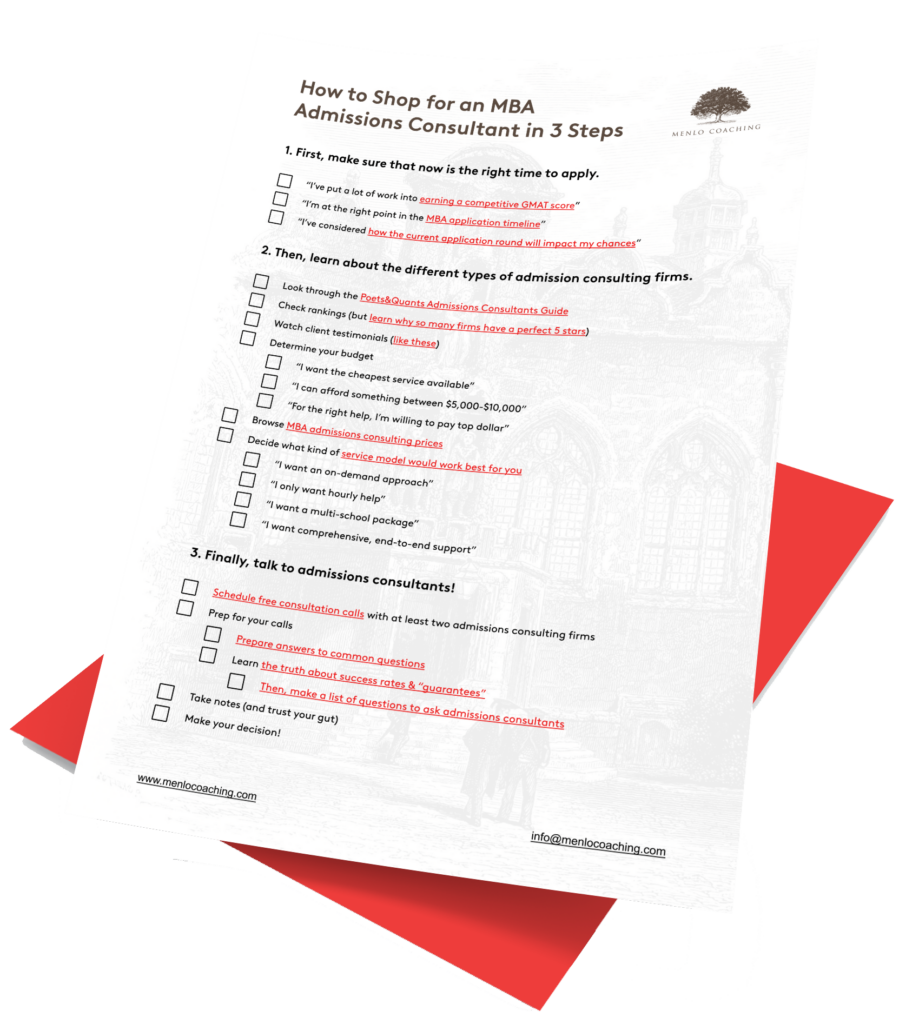
Our free, comprehensive checklist covers everything you need to shop for an MBA admissions consultant.