Work one-on-one with a Stanford MBA admissions coach from a small, full-time team that includes a former Director of Admissions at Stanford GSB. Everything we do for Stanford applicants starts with the question that decides the close calls: What matters most to you, and why?
#1 in Client Satisfaction
on Poets&Quants (9.98/10 NPS)
Former AdCom
Stanford GSB Director & Knight-Hennesey
12-15 clients
Per coach, per year
5/5
Stars
Based on 300+
Reviews
Stanford GSB admits roughly 6–7% of the people who apply, the lowest acceptance rate of any business school in the world. About 430 students start there each fall.
Robert Joss, former GSB dean, claimed he could double the size of the incoming class without touching its quality.
Many of the people who are declined look almost identical to the people who are admitted, so decisions come down to very small differences, and sometimes to luck.
That’s why you won’t hear a success rate from us.
Some Stanford GSB admissions consulting firms advertise 75% admit rates at a school that accepts one applicant for every fifteen applications. If it sounds too good to be true, it is.
Here’s our promise:
We evaluate every profile thoroughly before taking someone on, looking into your professional and educational background, your community involvement, and your personal and professional motivations for pursuing a Stanford MBA.
If Stanford is a realistic target, we’ll tell you what it will take.
~6–7%
of applicants admitted¹
434
students in the entering class²
738
average GMAT (689 on the Focus Edition)²
~4
outstanding applicants per seat³
¹ U.S. News and other outside reports across recent cycles. ² Stanford GSB Class of 2027 profile. ³ Menlo Coaching estimate.
Stanford says it looks for three things: intellectual vitality, demonstrated leadership potential, and personal qualities and contributions.
By the time you apply, the first two are mostly on the record, in your transcript, your test score, and your résumé, and nearly everyone in the pool has them.
The third is where a reader chooses between two files that look the same. And Stanford looks for evidence of these personal qualities and contributions in one main essay.
“What matters most to you, and why?” may be the most famous essay prompt in MBA admissions. Stanford set the standard with it, and nearly every top school has since added a personal essay of its own. Derrick Bolton, who ran Stanford GSB admissions until 2016, once described the standard of the essay as follows:
“Essay A should be so personal that if you were working on it at 2am and accidentally printed a copy to your office printer, you would break out in a cold sweat, grab the keys, floor it and drive as fast as you could to the office to snatch the essay before anyone could read it.”Derrick Bolton, former Director of Admissions, Stanford GSB
That isn’t exaggeration. Successful Stanford essays have covered topics like recovering from addiction, having an abortion, pride in an ethnic identity, and a mentor’s advice that changed a life. Details that would be inappropriate in any other application can be exactly right in this one.
After years of reading Stanford essays, we know what the reader is looking for. They want evidence that you’ve struggled, that you really lead, that you’re kind, and that you have a spark. Stanford and Harvard also have a soft spot for people with a consuming passion: someone who cares about one thing more than is strictly sensible.
That’s why Essay A gets more of our time than any other part of a Stanford application.
Most of our clients come from the most competitive pre-MBA environments: private equity and venture capital, investment banking, management consulting, and tech. Those are the backgrounds that fill a GSB class.
So for the people we coach, Stanford’s challenge usually isn’t qualifications. It’s standing out among dozens of applicants with the same qualifications. At that level, generic advice does real damage, because it produces the same essay everyone from your firm writes. We see the same first-draft mistakes every year:
Top university, top firm, strong resume, strong score. That’s the main line into Stanford from finance, consulting and tech, and it’s crowded. Ride it straight through and you risk languishing in the reader’s pile: undifferentiated and cookie-cutter.
When you work with Menlo Coaching, we take a detour. Before anyone drafts Essay A, we slow down and spend real time on who you are rather than what you’ve done. For high achievers, the pace takes some getting used to. In most other aspects of your life, more effort reliably buys better results. Essay A doesn’t work that way.
The right story comes from reflection and from trying alternatives, and sometimes from throwing out an idea that you've drafted 10+ times to find the angle that makes a reader want to admit you.
Some firms shorten this stretch with worksheets and story templates. It saves time, but a template can only take you to answers someone has already given, and Stanford’s readers have read them before.
We start here: a Personal Story Call. A long conversation, often running for hours, about your whole life and not just your career. We follow each story from start to finish: what happened, how it felt, what you did about it, what you learned. Where it helps, we ask for a written history of everything you remember, and we sometimes talk to the people who know you best, including parents. The best material is almost never what you bring to the first call.
Next, your hard choices. We believe real values come from experiences where you face a difficult trade-off. So we list the big decisions you’ve made, including the ones you turned down:
Then drafts, and second thoughts. Most clients bring more material than 650 words can hold, sometimes twenty possible directions. We try angles, compare them, and let go of the ones that don’t land, even when that means starting over. What survives is the one or two things you care about most. They go into your Master Story Document, the roadmap for Essay A.
Then everything else moves faster. Deciding how to present yourself is the hardest call in any application, and the detour is where you make it. The Master Story Document goes on to shape your short answers, your recommenders’ briefings and the stories you’ll tell in your interview. Other schools ask different questions with different word limits, but much of the thinking carries over, so each application after the first takes less time.
We describe our coaching as "total overkill." Stanford is where it matters most.
Your coach has the time. We cap each coach at 12–15 clients a year, well below the load at high-volume firms. A Stanford essay can go through 25 or 30 drafts before it's right. A coach juggling fifty clients can't give you that. One with fifteen can, and can turn each draft around fast.
Your coach is a writer. Our team includes humanities PhDs, including Alice van Harten, who taught personal-essay writing in Stanford's undergraduate humanities program. It also includes published authors like Jarrett Brandon Early, who has written three novels. Stanford's essay rewards plain, honest writing more than polish, and our writers know the difference.
You'll hear the truth. Your coach is your advocate, not your cheerleader. When a draft isn't working, you'll hear it, along with why and what to try next. At a 6–7% school, that honesty is what you're paying for.
Stanford had always been her dream school, but she didn't think it was possible and applied mostly "to show myself that I at least tried." With her coach, she mapped her life story all the way back to middle school, found the themes that became her essays, and went 8 for 8 in admissions. She joins the Stanford GSB Class of 2028.
He had a PhD and a career in Big Tech and startups, but his first round of MBA applications a few years earlier "were not where I wanted it to be." The second time, his coach started by telling him plainly what he needed to fix, then spent two hours walking through his life story from birth, looking for what really drives him. These findings became the center of his essays, and earned him a place at Stanford GSB.
Her early essays leaned on an immigrant story she later called "quite trite and overplayed." Her coach pushed her to find what was truly her own, and some essays took more than 20 drafts. She was admitted to five of the six schools she applied to and chose Stanford GSB, "the perfect fit for me given my goals with entrepreneurship.
Once we know what matters most to you, the rest of your application has something to point back to. Here's how our team handles each part for Stanford.
We build a Career Goals Master Document with you: a real roadmap, not just application copy. It’s pressure-tested by people who have hired for the roles you’re targeting. David White is a fifteen-year tech executive who was the first employee at a startup Adobe later bought for $400M. Mike Mascarenhas is a former Bain recruiter and JPMorgan strategist. That matters at Stanford, where technology hires more graduates than any other industry, at 35% of the Class of 2025.
Your “Why Stanford” comes from real conversations with students and alumni, not the brochure. Touchy Feely is the most famous thing about the GSB, which is exactly why it’s so hard to say anything new about it.
At Stanford, the interviewer reads your résumé and nothing else, so every line becomes a possible question. We take it through 20+ rounds, cutting jargon and making your leadership easy to see.
Stanford’s optional short answers are where the accomplishments Essay A leaves out finally appear. We regularly help clients cut 600-word drafts to 200 without losing the point, and plan time for the extra questions on Stanford’s form, which take longer than anyone expects.
We manage the recommendation process from start to finish. Your two recommenders get an early brief and professional feedback, so their letters are specific and consistent with your story.
Stanford’s interview is behavioral, run by an alum or admissions staff who has seen only your résumé. Obinna Arizor runs Stanford-specific mocks based on questions our clients have faced. Eduardo Placer’s Broadway-trained team works on how you come across. Founders practice investor-style questions.
Stanford GSB's financial aid is need-based only; no amount of GMAT points or essay polish earns merit money there. The main route to a fully funded Stanford MBA is the Knight-Hennessy Scholars program, which covers tuition, living costs and travel for up to three years. It's a separate application, it's harder to get into than the GSB, and we know it unusually well. Luke Anthony Peña was its Director of Admissions. He led 40 evaluators through more than 8,000 applications a year and admitted about 1% of them.
We coach KHS applicants alongside their GSB application, from the story bank the interview draws on to rehearsing the group discussion. In that discussion, thoughtful disagreement counts in your favor, and both dominating and nodding along count against you.
Here's how we'd judge (and encourage you to judge) any Stanford GSB admissions consulting firm, including us:
Ask any firm
Here's how we measure up...
Most firms hire on a single credential, usually former admissions officers or MBA graduates. We don't think any one qualification makes a great coach. So our team is full-time and deliberately mixed. What we all share is a deep understanding of career paths, experience developing young professionals, and skill with writing and storytelling.

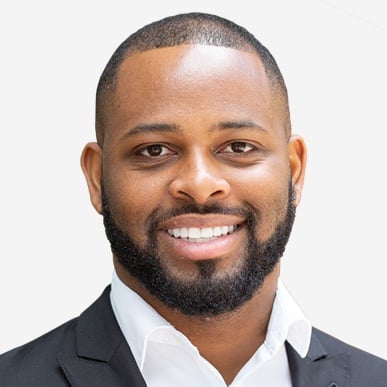
Directed admissions at Stanford GSB, Dartmouth Tuck and Knight-Hennessy Scholars, where he led 40 evaluators through 8,000+ applications a year.
Not always. Every year, people are admitted to Stanford, Harvard and Wharton without one. Some applicants have the time, self-awareness and writing skill to do it alone.
But for the people we usually work with, the constraint is rarely talent. It's bandwidth. You're applying to the most selective business school in the world while doing a demanding job, and the margins are small enough that a single weak essay can decide the outcome. We're built for applicants who don't want to leave anything to chance.

Because we cap how many clients each coach takes, our calendar fills quickly, and many clients book a year or more in advance.
Your first conversation with a Stanford MBA admissions coach is free. You'll get a straight answer on where you stand at Stanford, which schools belong on your list alongside it, and our first read on what your answer to What matters most? might be.
If you’re more than a year out, our Early Bird program finds the gaps in your profile while there’s still time to close them. Stanford notices leadership and commitment that build over years. Almost every late starter we’ve coached, including some who were admitted, says they wish they’d started sooner.
| Round | Application due | Decision |
|---|---|---|
| Stanford GSB · Round 1 | Sep 9, 2026 | Dec 9, 2026 |
| Knight-Hennessy Scholars | Oct 6, 2026 | Spring 2027 |
| Stanford GSB · Round 2 | Jan 6, 2027 | Apr 1, 2027 |
| Stanford GSB · Round 3 | Apr 7, 2027 | May 27, 2027 |