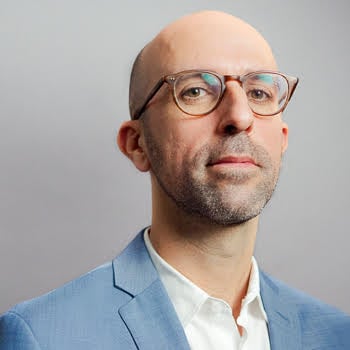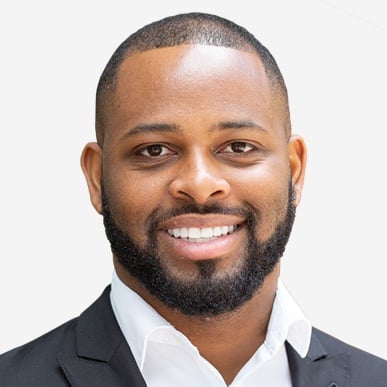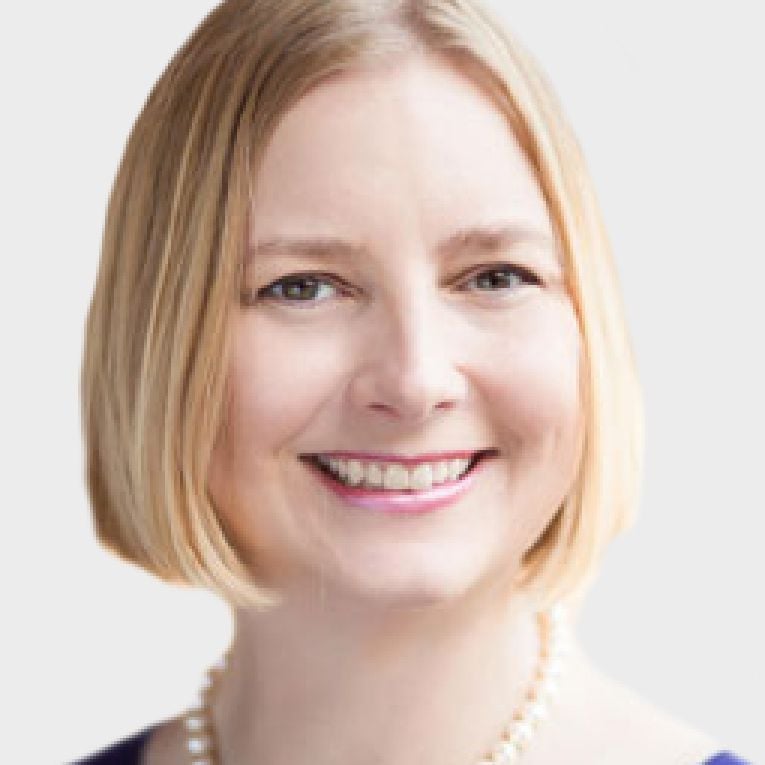
A HBS MBA admissions coach at Menlo Coaching works with 12 to 15 applicants a year, backed by a team that includes former admissions directors, business executives, and PhDs. Most of the people applying alongside you will be qualified, and many will come from your industry, maybe your own firm. Our job is to make yours the application Harvard remembers.
It starts with a free consultation.
#1 in Client Satisfaction
on Poets&Quants (9.98/10 NPS)
Former AdCom
Directors from Stanford GSB, Tuck & IESE
12-15 clients
Per coach, per year
5/5
Stars
Based on 300+
Reviews
Years ago, we coached an applicant who had worked with President Obama. We thought an HBS interview was a given. The invitation never came.
That’s Harvard. In the last reported cycle it received 9,409 applications and enrolled 943 students. HBS doesn’t publish an admit rate, but outside estimates put it near 11%. Our own estimate is that about four outstanding candidates compete for each seat, and the ones turned away are rarely weaker than the ones admitted. Poets&Quants even runs a series titled “You Won’t Believe Who Harvard Just Dinged.”
So we don’t quote admit rates. When a school says no to roughly nine applicants in ten, a consultant promising you odds is selling something no one can deliver.
What we do promise is a real assessment before you become a client. That’s where our Harvard Business School admissions consulting begins. If Harvard is within reach, we’ll show you where your application needs work. If your scores, school or employer put it out of reach, we’ll say so and point your effort at schools where it will pay off. If an MBA, or this year, is the wrong call, you’ll hear that too.
We’ll also be straight about what HBS can and can’t do for you. One HBS student we know put it simply: it isn’t a magic pill. Your career afterwards still depends on your skills and experience, and alumni career coaches warn students not to expect a top private equity or venture job without relevant experience beforehand. If your plan depends on Harvard doing something it can’t, we’d rather tell you now than after you’ve enrolled.
Whatever we find, you won’t apply to HBS alone. Each year, strong clients of ours interview at Harvard and end up at Wharton, Stanford or Columbia instead, so every list we build includes schools you’d be glad to attend. The assessment can also go the other way. Several of our HBS admits had written Harvard off as out of reach until their coach told them to apply.
~11%
of applicants admitted¹
9,409
applications for 943 seats²
58%
of the class from consulting, PE/VC, tech & finance²
~4
outstanding applicants per seat³
¹ Outside estimates (U.S. News, Clear Admit); HBS doesn’t publish a rate. ² HBS Class of 2027 profile. ³ Menlo Coaching estimate.
Harvard describes the students it wants as business-minded, leadership-focused and growth-oriented. Read that list from inside a PE fund or a consulting team, and you’ll recognize most of your colleagues. That’s the difficulty. For the people we coach, all three traits are already documented in resumes, recommendations and test scores. As we put it bluntly in our own HBS guide, “good” experience, scores and essays aren’t enough on their own to get you in.
What gets noticed is harder to fake: a reader finishing your application with a clear picture of a person, not a profile. HBS’s own wording points the same way. It wants people “passionate about using business as a force for good,” who “develop and nurture diverse teams,” and who grow through “active listening, and lively discussion.” None of that shows up in deal size or promotion speed. It shows up in specific moments with other people, which is exactly the material a resume leaves out.
A student we spoke with during her first year at HBS said as much:
“Some of the most compelling people at HBS are not necessarily the ones with the shiniest resumes but the people who have the most compelling personal stories to tell.”An HBS first-year student, in an interview with Menlo Coaching (2019)
The format makes this harder. In 2024, HBS replaced its single open essay, 900 words on no set topic, with three short prompts: 300 words on your choices, 250 on how you lead and invest in others, and 250 on your curiosity. A short prompt that names its topic invites the expected answer. Admissions readers see thousands of those, and they blur together.
People often assume the fix is to get more personal, Stanford-style. At HBS that usually misfires. In our reading, what works at Harvard is “the story that befits a future business leader”: personal, concrete and restrained. It also has to survive a conversation, because HBS interviewers come from the admissions board and have read what you wrote.
That’s where our effort goes. We don’t try to make your accomplishments sound bigger. We look for the part of your story that belongs to you alone, then carry it through the whole application.
We mostly coach people from private equity, venture capital, banking, consulting, and tech: the same fields HBS fills its class with.
So our clients rarely have to ask whether they’re good enough. The harder question is why HBS should take them over the other associates from their fund who are applying this year. Standard essay advice makes that worse, because everyone at your firm has read the same advice.
First drafts tend to fail in the same four ways:
Top university, top firm, strong resume, strong score. That’s the main line into HBS from finance, consulting and tech, and it’s crowded. Ride it straight through and you risk languishing in the reader’s pile: undifferentiated and cookie-cutter.
When you work with Menlo Coaching, we take a detour. Before anyone drafts an essay, we slow down and spend real time on one question: if HBS takes only one person from your firm this year, why should it be you? For high achievers, the pace takes some getting used to. In most other aspects of your life, more effort reliably buys better results. Three essays of 250 to 300 words don’t work that way.
The right story comes from reflection and from trying alternatives, and sometimes from throwing out an idea that you've drafted 10+ times to find the angle that makes a reader want to admit you.
Some firms shorten this stretch with worksheets and story templates. It saves time, but a template can only take you to answers someone has already given, and HBS’s readers have read them before.
We start here: a Personal Story Call. A long conversation, often running for hours, about your whole life and not just your career: family, places and turning points as much as jobs. We follow each story from start to finish: what happened, how it felt, what you did about it, what it changed in you. Where it helps, we ask for a written history of everything you remember, and we sometimes talk to the people who know you best, including parents. Some of the best HBS essays we’ve worked on started as an aside the client almost didn’t mention.
Next, your real choices. HBS asks how your choices have shaped your career, so we list the big decisions you’ve made, including the ones you turned down:
Then we ask why. Two analysts at the same bank almost never chose the same things for the same reasons, which makes this one of the most reliable places to find what’s yours.
Then drafts, and second thoughts. Most clients bring far more material than three short essays can hold, sometimes eight or more possible stories. We try angles, compare them, and let go of the ones that don’t land, even when that means starting over. Each story that survives goes where it does the most work: leadership and curiosity each get one well-chosen example rather than a montage, and what your transcript and resume already prove stays out entirely. The plan goes into your Master Story Document, the roadmap for all three essays and the 500-character goals answer.
Then everything else moves faster. Deciding how to present yourself is the hardest call in any application, and the detour is where you make it. The Master Story Document goes on to shape your recommenders’ briefings and the stories you’ll tell in your interview, and a reader who meets the same story in every part of the application tends to remember it. Other schools ask different questions with different word limits, but much of the thinking carries over, so each application after the first takes less time.
She had too many stories and worried they would never add up to one. Lainie had read enough essays to know which of her "special" stories would come off as generic and which would show her leadership. Then Lainie worked through the essays with her sentence by sentence. Admitted to HBS, and to Wharton with a fellowship.
He started late, was working PE hours, and applied to just one school. On their first call, Lainie had him walk her through his life "from the day you were born." She picked out a theme he didn't think was a big deal: the hard-working people he grew up around. It became the heart of his HBS essay, and on decision day he opened the portal to "congrats" at the top.
She worried she'd be filed away as one more "Indian applicant who is an engineer." David kept asking how India, the US and Germany had changed her until her real story came out. She says it was "like peeling an onion." HBS was the first school to admit her, and she chose it over a full ride at another M7.
Our coaching model has a name, "total overkill," and a limit that makes it work: no coach takes on more than 12 to 15 clients a year. In a pool where small differences decide, that capacity goes into five things.
Drafts until it's right. Finding the story that sets you apart takes long conversations and many rounds. Some of our HBS admits revised a single essay 12 times or more, and some came close to 30. That isn't possible when your coach has fifty other people waiting.
Writers in your corner. Alice van Harten has a Cambridge PhD, Jarrett Early and Lainie Blum Cogan are published authors, and Yaron Dahan trained in literature and screenwriting. In 250 words, clear and specific beats clever, and they know how to get you there.
Edits you won't always enjoy. We'll tell you when your favorite story is the one everyone in your industry tells, and help you let it go.
Answers when you need them. Low client loads mean quick turnarounds. When a worry lands at six in the morning or a deadline is two days out, your coach has room to answer that day, not next week.
Once your core story is settled, the rest of the application gets easier to write, because it has something to support. For HBS, that means six more pieces.
That’s roughly 80 words, so a vague answer won’t work. We first build a Career Goals Master Document: a genuine plan, tested by people who have done the hiring. David White brings fifteen years in tech. Pascal Michels evaluated MBA hires at Citi and later represented career services on IESE’s admissions committees.
The plan also has to be realistic. Tech (22%), consulting (21%) and private equity (14%) take the most HBS graduates, and PE recruiting starts early and favors prior experience.
HBS interviewers read your application before they meet you, so any line on your resume can become a question. It gets 20+ rounds of revision, until the jargon is gone and the leadership is easy to see.
We manage both letters from start to finish: early briefs, professional feedback, and a consistent story. At the firms that send the most people to HBS, the school reads a lot of letters from the same partners. In our experience, what counts is a recommender who is a real advocate, with stories about you that no one else could tell.
If you’re reapplying, our Ding Analysis starts with what held you back last time, letters included.
You get thirty minutes with a member of the admissions board, at the pace of a case discussion. Obinna Arizor, who has run more than 1,000 mock interviews, leads HBS-format mocks built from your own file, and Eduardo Placer’s actors work on presence. We also help with the written reflection HBS asks for within 24 hours.
The Class of 2027’s medians were 685 on the GMAT Focus (730 on the old scale) and 164/164 on the GRE. GMAT Focus takers may also need GMAC’s Business Writing Assessment after an interview invitation, and we’ll help you decide when to take it. Chris and Hailey, both 99th-percentile tutors, can help with the score itself.
Everyone cites the case method. We push you toward specifics you’ve seen or heard yourself, such as a class visit, a conversation with a student, or an introduction to former clients now at HBS. Reasons that are yours are harder to copy.
Two good offers. Many HBS admits also hold offers from Stanford or Wharton, sometimes with large merit scholarships that HBS can’t match, because it doesn’t give any. We help you decide on your goals, not the brand. Clients of ours have walked away from six-figure scholarships to go to HBS, and others picked Stanford for its fit. The case method, the network and where you want to live afterwards all belong in that decision. Both were sound choices.
A waitlist or a deferral request. Neither is final. One client stayed on HBS’s waitlist with our help and was admitted after Round 2. Another asked to defer her start, was turned down, and asked again with a stronger case. HBS agreed.
Use the same checklist on us that you’d use on anyone offering Harvard Business School admissions consulting:
Ask any firm
We didn’t hire around a single credential. The people who coach HBS applicants at Menlo Coaching include:
On Poets&Quants, our clients give us a 9.98/10 NPS, first for client satisfaction among the 550-plus firms reviewed there.
Sometimes it isn’t. People get into HBS on their own every year, and with over 9,000 applicants, some succeed despite missteps.
Most of our clients could write a decent application alone. As we tell prospective clients, the constraint is rarely talent. It’s bandwidth. They’re trying to stand out among peers who look just like them while working long weeks, and at HBS one forgettable essay can make the difference. They hire us so nothing is left to chance.
The things HBS weighs most, leadership built over years and evidence of how you invest in others, can’t be manufactured the month before a deadline. Because we limit each coach’s clients, our calendar fills, and plenty of clients book a year or more ahead.
Your first conversation with an HBS MBA admissions coach is free. Expect a candid view of your chances at Harvard, a first pass at the rest of your school list, and our early read on what could set you apart.
Our Early Bird program starts 12 to 36 months out, while there’s still time to fill the gaps: a leadership role outside work, a test score that needs another attempt, campus visits and conversations that make your reasons for Harvard real.
| Round | Application due | Decision |
|---|---|---|
| HBS · Round 1 | Sep 9, 2026 | Dec 10, 2026 |
| HBS · Round 2 | Jan 5, 2027 | Mar 25, 2027 |