
For parents in Charlotte considering Charlotte Latin School for their child’s high school years, there is a strong reputation to go on and less published data than at the other large private schools in the city. In this profile, we set out what Latin offers in the Upper School—the course track, the college counseling, the admissions process, and the cost—and which kinds of students do best there.
Charlotte Latin is a strong choice by any of the usual measures, but for families hoping to maximize their child’s academic preparation and their chances at a selective university, we believe the things to look at are:
We assess Latin on the same criteria as the other schools in our Charlotte series, and we say below where it falls short for some students.
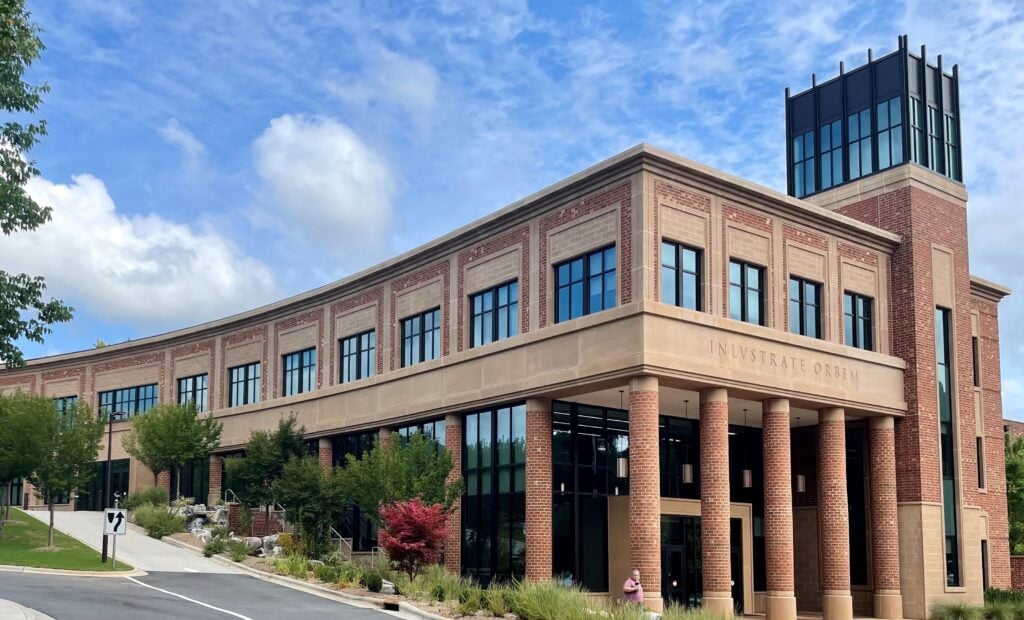
Charlotte Latin is a private school on Providence Road in south Charlotte. Despite the name, it is not a classical school in the modern sense, and students are not required to take Latin. For a side-by-side view of the best private and public high schools in the city, see our Guide to the Best Charlotte High Schools.
| Founded | 1970 |
| Grades | TK–12 |
| Total enrollment | 1,555 (2025–26) |
| Upper School (9–12) enrollment | 586 (2025–26) |
| Upper School tuition | $36,500 (2026–27) |
| Financial aid | $3.25 million awarded; average award $17,900 (2024–25). Share of students on aid not published |
| Student-to-teacher ratio | 9:1, school-wide, TK–12 (2026) |
| Advanced courses | 23 AP subjects (2025–26); Honors courses across departments; no IB |
| Religious affiliation | None (nonsectarian) |
| Campus | Single campus on Providence Road, Charlotte 28277 |
| Athletics | NCISAA; conference play in the CISAA |
| Niche overall grade | A+ (2027); #6 of 41 private high schools in the Charlotte area |
| Head of School | Chuck Baldecchi (since July 2019); Head of Upper School Tracey Vanneste (since July 2026) |
The 2025–26 Upper School profile is the most recent the school has posted, so enrollment and course figures are a year older than those on our other Charlotte school pages. Figures are from Charlotte Latin’s own publications and from Niche, which combines published data with parent and student reviews; links are in the Charlotte Latin Resources list at the end of this profile.
The first thing to understand about Latin’s academics is that the school, not the student, decides who takes the hardest courses. Upper School students take six courses a year, usually five academic courses plus one enrichment course, on a phone-free campus.
Latin offers Advanced Placement (AP) courses—college-level classes with a national exam each May, which shows a university that a student took the hardest work available—in 23 subjects, and every AP student sits the exam. Honors courses run in English, math, some sciences, history, and upper-level world languages. There is no International Baccalaureate (IB) program.
Teachers place students in Honors and AP based on benchmarks, and only four APs are open to anyone who wants them: Psychology, Economics, Environmental Science, and Computer Science Principles. So a student who wants a transcript full of APs has to earn each placement, which might suit a student who responds to clear expectations and might frustrate one who would rather choose.
The placement that worries parents most is math. Latin tells universities that its “Honors math curriculum is unusually rigorous and fast-paced,” so “many fine math students are placed in ‘standard’ courses,” and AP Calculus follows Honors Precalculus. A standard math placement at Latin is not the weak track it would be at many schools, and we return to what that means for an application below.
Three programs set Latin apart from the other schools in our series:
Speech and Debate and Global Studies are part of the Upper School program for all students.
At Latin, the college counseling office is well staffed: four full-time college counselors, Director Jody Jennings and three associate directors, supported by a registrar, an administrative assistant, and three essay specialists. With 145 seniors in the Class of 2026, that works out to about 36 seniors per counselor by our calculation, the same caseload as Providence Day and higher than Charlotte Country Day’s 27. At 36, a counselor can know your child well enough to write a specific, personalized recommendation.
What Latin does not publish is the harder part of the picture. There is no SAT or ACT middle 50%—the range from the 25th to the 75th percentile of the class—so a parent cannot see where their child’s scores sit against classmates’. The school does publish National Merit results, a scholarship program based on the junior-year PSAT in which Semifinalists are among the top scorers in each state: the Class of 2026 had 12 Semifinalists, and across 2023–25 the school counted 20 Semifinalists and 46 Commended Students.
Matriculation is published the same way, as a three-year list with no counts. Across the Classes of 2023–25, at least one Latin graduate enrolled at:
Because the school does not say how many students enrolled at each university, a university that accepted one Latin graduate in three years looks the same on this list as a university that admitted ten.
Twelve National Merit Semifinalists in a class of 145 tells you that your child will be applying alongside many classmates with similar grades and scores, often to the same universities, with letters from the same four counselors. Standing out within the school is the task, and at Latin the material for it is in the programs above: a Fab Academy project, AP Latin or Greek, or a leadership role under the honor code is something an admissions officer sees rarely. Our guide to the benefits of extracurricular activities for college covers how to choose them.
The standard math placement is the second thing to plan around. Latin’s profile tells universities directly that standard math holds many strong students, so a parent whose child lands there should ask about the path to AP Calculus rather than contest the placement.
Because Latin publishes no score ranges, testing goals have to come from each target university’s own middle-50% data, not from the school. Our guide to what colleges you should apply to explains how to build that list.
A counseling office of four with three essay specialists is a good one. What it cannot do is give any one student the hours that a personal statement and a full set of supplemental essays take, and no counselor—ours included—can promise a result at the universities on Latin’s list.
Planning ahead for college from Charlotte Latin? James Edge has worked with students from Charlotte Latin and schools across Charlotte. Book a free consultation to talk through your child’s path.
Latin accepts applications for every grade, and the school says it “naturally expand[s]” at TK/K, 6th grade, and 9th grade. Upper School applications are taken for grades 9–11. For students entering in fall 2027:
| Step | Date |
|---|---|
| Sibling applications due (K–12) | October 15, 2026 |
| Application deadline, TK and K | January 2, 2027 |
| Application deadline, grades 1–11 | January 15, 2027 |
| Financial aid application due (priority) | January 15, 2027 |
| All file materials and testing complete, Middle and Upper School | February 26, 2027 |
Campus tours run throughout the school year.
Applicants for grades 5–11 take the ISEE (Independent School Entrance Exam), and the school’s application page does not name the SSAT. Upper School applicants also attend a required Visit Day, which includes an interview and time with a student ambassador, and each family is assigned an admission counselor. The school does not publish an acceptance rate.
For 9th-grade applicants, three things are worth doing early:
Tuition for 2026–27:
| Grade | Tuition |
|---|---|
| TK and K | $27,600 |
| Grades 1–5 | $32,600 |
| Grades 6–8 | $35,200 |
| Grades 9–12 | $36,500 |
Latin’s Upper School tuition is the highest of the four private schools in our series, and it covers less than Providence Day’s: most course and lab fees are included, but textbooks cost extra in grades 6–12.
Other costs to plan for:
Two-payment and monthly plans are available.
Financial aid is need-based, and the school aims to meet up to 100% of a family’s demonstrated need. In 2024–25, Latin awarded $3.25 million, 6% of its operating budget, with an average award of $17,900. The school does not publish the share of students who receive aid, so a family cannot tell from the website how common aid is; ask the admissions counselor directly. Latin also offers Malone Scholars scholarships for highly capable students.
Are you hoping to enroll your child in Charlotte Latin? Learn how Dr. James Edge can help.
Athletics are a big part of Latin’s identity. The school fields 66 teams in 17 sports for grades 7–12, and its athletics department counts 198 NCISAA state championships and 18 Wells Fargo Cups (the association’s all-sports award) as of December 2025. Recent titles include five girls’ lacrosse championships through 2023–24, three straight boys’ golf titles from 2022 to 2025, and the girls’ golf program’s first title in 2025–26.
Facilities include the 1,450-seat Patten Stadium and an Olympic-size pool run with SwimMAC Carolina. A serious athlete gets a top NCISAA program here, and should ask on Visit Day how a varsity schedule fits with the course load.
Outside athletics, students choose from more than 50 clubs, and the honor code shapes daily life. Student reviews on Niche name traditions such as Homecoming, Spirit Week, and Concert in the Quad.
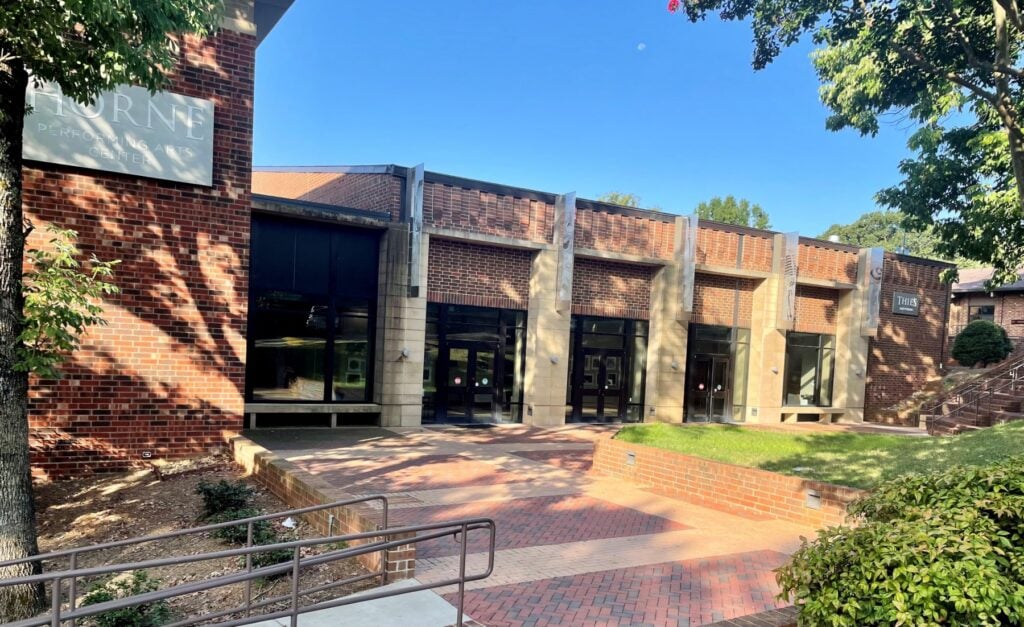
Notable alumni include NFL quarterback Daniel Jones, the sixth overall pick in the 2019 draft.
The other three large private schools in Charlotte differ from Latin mainly in size, track, and price:
All four require the ISEE and set mid-January 2027 application deadlines.
Latin wins on classical languages, on the Fab Lab, and on the honor-code culture for a student who does well with structure. It loses on data: it publishes the least about outcomes of the four, has the highest Upper School tuition, charges separately for textbooks, and has no IB option. A family that wants to compare schools on test ranges, or that wants IB, should look at alternatives like Country Day first; a family whose child wants Greek, wants to build things, or needs clear expectations to do their best work should start here. See the full side-by-side comparison in our Guide to the Best Charlotte High Schools.
Do students have to take Latin at Charlotte Latin? No. Students choose among Latin, French, and Spanish, and can add Honors Greek. The name reflects the founders’ liberal arts vision rather than a modern “classical school” model, and the school describes its program today as traditional and college-preparatory.
Is Charlotte Latin hard to get into? Latin doesn’t publish an acceptance rate, so there is no number to compare.
Does Charlotte Latin require the ISEE or SSAT? The ISEE, for applicants to grades 5–11. The school’s application page names only the ISEE, so check with the admissions office before relying on SSAT scores. All Middle and Upper School testing must be complete by February 26, 2027.
Whether your child is choosing a high school or already at one, the course levels, AP placements, testing plan, and activities chosen in 9th and 10th grade shape their college applications three years later. If you’d like an honest assessment of where your child stands and what those choices should be, book a free consultation with Menlo Coaching’s Charlotte team.

James Edge, PhD
Director & Sr. College Admissions Consultant
Education: BA
Based in Charlotte, NC, James has helped students win admission to Yale, Stanford, Harvard, Princeton, Duke, and more. A former Providence Day teacher, he combines deep local knowledge, candid strategy, expert writing coaching, and a talent for helping students translate years of hard work into standout applications.
Speak with our strategic advisors to evaluate profile fit, identify best-fit target schools (Ivy League or otherwise), and define a clear application roadmap.

